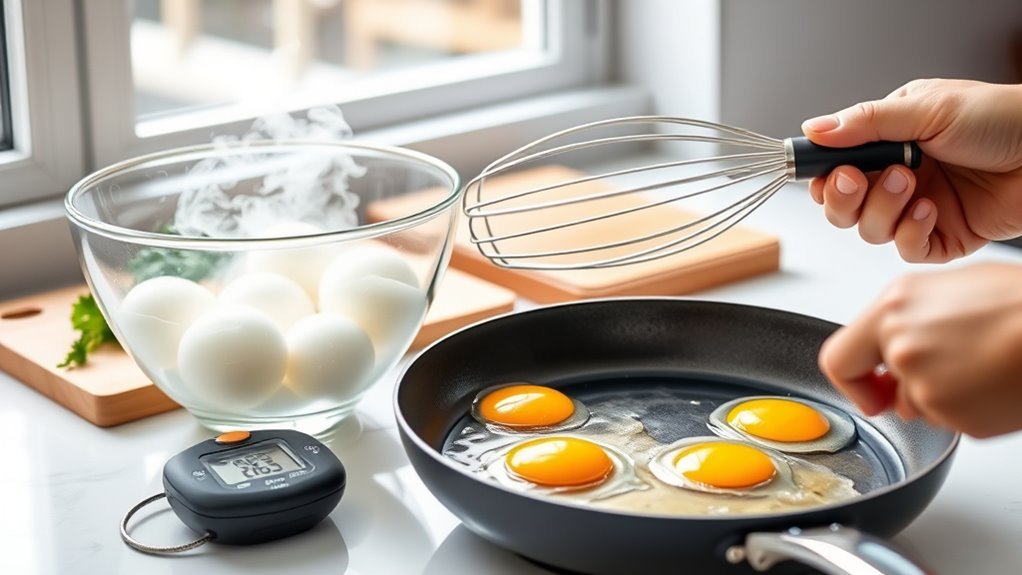
How to Safely Eat Frozen Eggs
To safely eat frozen eggs, start by checking them carefully for any cracks, leaks, or strange smells. If you notice anything off, it’s best to toss those eggs out to avoid any risk.
Next, thaw your eggs properly—either overnight in the fridge or under cold running water. Avoid thawing at room temperature or using hot water because that can encourage bacteria growth, and nobody wants that.
Once your eggs are fully thawed, make sure to cook them thoroughly. You can scramble, boil, or bake them—whatever you prefer—but don’t skip cooking them all the way through.
After cooking, try to use the eggs within 1-2 days to keep them fresh and tasty.
If you want to keep the quality of your frozen eggs and pick up the best cooking tips, there’s definitely more worth exploring!
Key Takeaways
- Thaw frozen eggs safely in the refrigerator overnight or under cold running water to prevent bacterial growth.
- Always check your thawed eggs for cracks, leaks, or any strange smells before using them. This helps make sure they’re safe to eat.
- Be sure to fully cook thawed eggs by scrambling, boiling, or baking. Cooking them thoroughly gets rid of any potential bacteria.
- Try to use thawed eggs within 1-2 days to keep them fresh and tasty.
- If you notice any signs of spoilage, contamination, or foul odors, it’s best to throw the eggs away. Don’t take any chances with your health!
How to Inspect Frozen Eggs and Thaw Them Safely
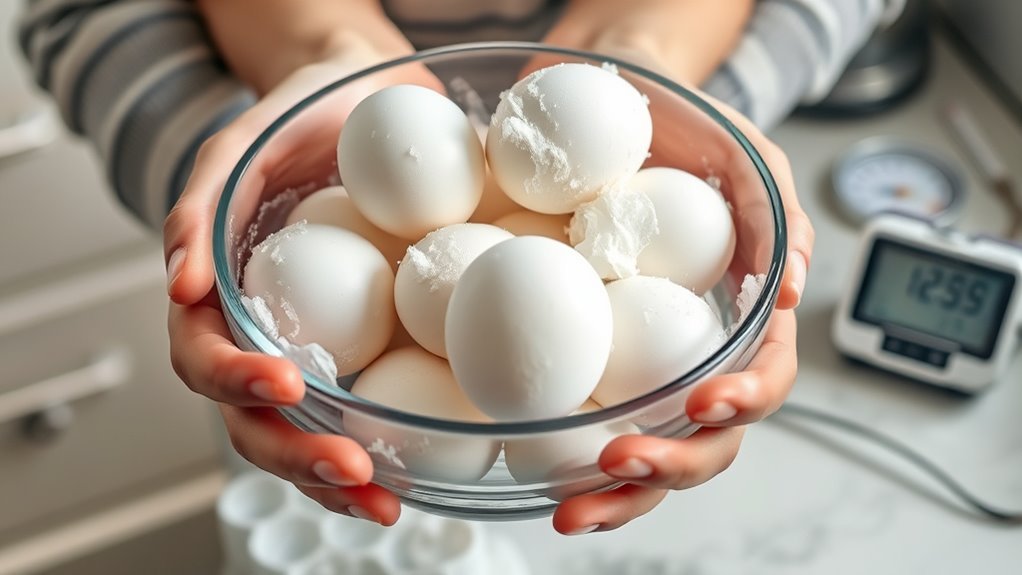
Before you cook with frozen eggs, make sure to inspect them carefully once thawed. Check for cracked shells, leaks, or any signs of egg contamination that could compromise egg safety.
Always inspect thawed frozen eggs for cracks, leaks, or contamination before cooking to ensure safety.
If you notice any damage or unusual odors, discard the egg immediately to avoid spoilage. Better safe than sorry, right?
For thawing eggs, refrigerator thawing overnight is the safest method, guaranteeing a steady, cool temperature. Alternatively, you can use cold water, running it gently over the eggs to thaw them evenly.
Just avoid thawing eggs at room temperature or with hot water, as these increase bacterial growth risks and reduce egg quality. By following these steps, you’ll maintain the integrity of your frozen eggs and ensure they’re safe to use in your recipes.
How to Cook and Use Thawed Eggs to Preserve Quality
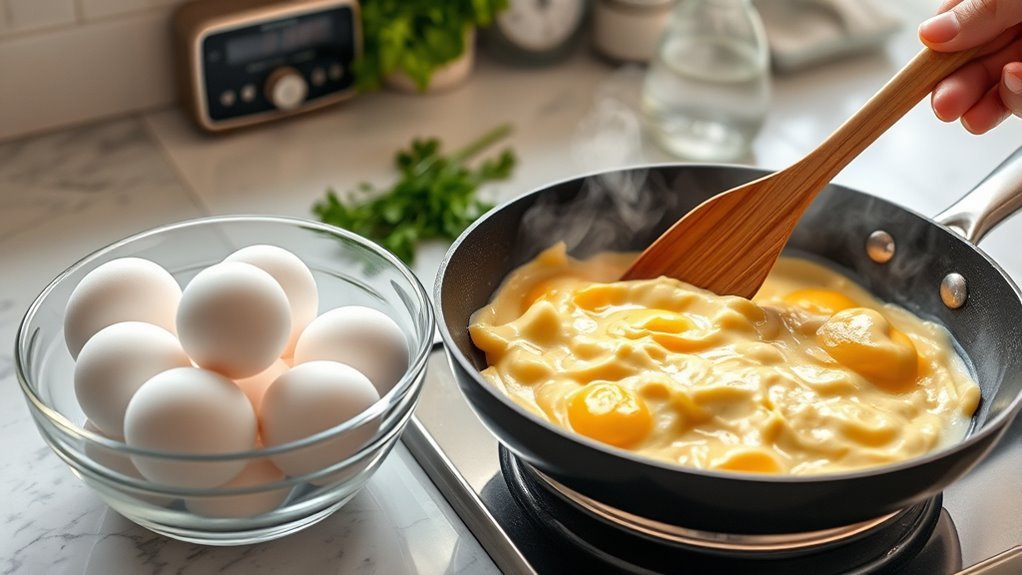
When you cook thawed eggs, making sure they’re fully cooked helps preserve their texture and guarantees they’re safe to eat. You can scramble, boil, or bake thawed eggs to maintain quality.
Egg whites might be a bit runny after freezing, which is actually great for meringues or smoothies. For egg yolks, adding salt or sugar before freezing helps avoid gelation. Then, after thawing, you can use them in quiches or custards.
Always thaw eggs in the fridge or under cold water. And remember, use them within 1-2 days to keep things fresh.
| Cooking Method | Texture | Best Use |
|---|---|---|
| Scrambled | Fluffy | Breakfast dishes |
| Boiled | Firm | Salads, snacks |
| Baked | Moist & Soft | Quiches, casseroles |
Frequently Asked Questions
Can PCOS Patients Freeze Eggs?
Yes, you can freeze your eggs if you have PCOS. It’s a safe, effective option for preserving fertility, but you should work closely with a specialist to manage risks like ovarian hyperstimulation during retrieval.
What Happens if My Eggs Accidentally Freeze?
If your eggs accidentally freeze, the yolks become gel-like and the shells might crack. You should check for cracks and discard any damaged eggs to avoid bacteria. Use intact eggs quickly, as texture changes affect cooking.
Can I Eat Eggs if I Have Coronary Artery Disease?
Sure, you can eat eggs with coronary artery disease—just don’t start a yolk rebellion on your arteries. Stick to egg whites or one yolk a day, and always check with your doctor to play it safe.
What Is the Best Way to Use Frozen Eggs?
You should use thawed frozen eggs fully cooked, especially yolks, which get gel-like. Whites work great directly in recipes. Always defrost slowly and discard any eggs with cracked shells to keep things safe and tasty.
Conclusion
Now that you know how to inspect and thaw frozen eggs safely, you’re ready to cook with confidence. Treat thawed eggs like fresh ones—use them promptly to preserve quality and avoid any culinary mishaps.
Remember, just like a knight carefully polishing his armor before battle, you’re preparing your eggs with care to guarantee a safe and tasty meal.
With these simple steps for handling and cooking frozen eggs properly, you’ll never have to worry about food safety or texture issues again. Safely eating frozen eggs is all about proper thawing, quick use, and mindful cooking. Follow these tips, and your frozen eggs will be just as delicious and safe as fresh ones every time!