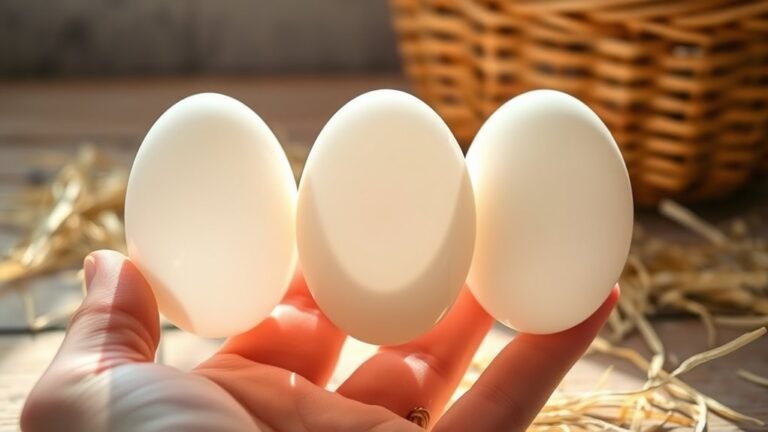
How to Safely Eat Fertilized Chicken Eggs
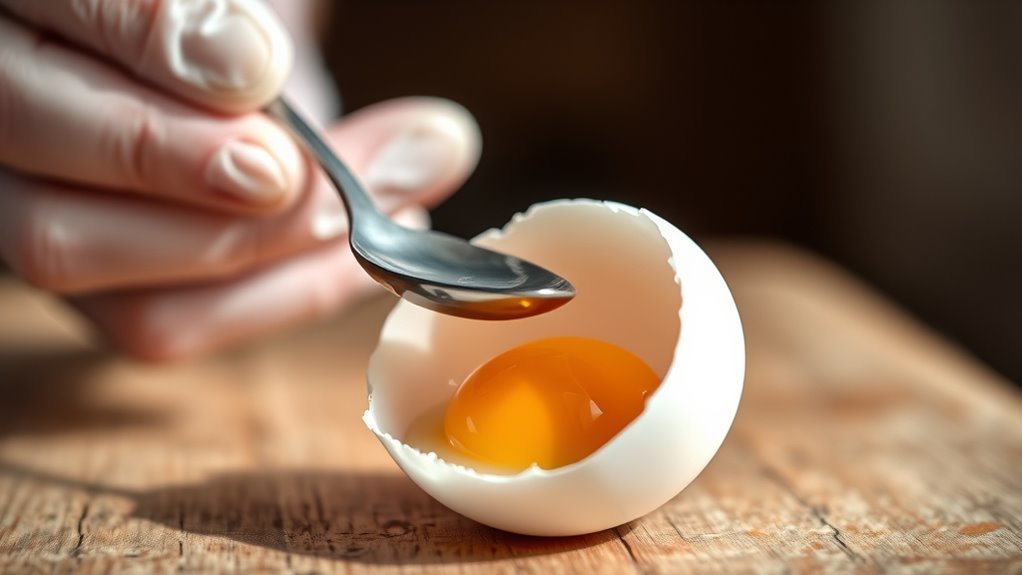
You can safely eat fertilized chicken eggs by first checking for a small white spot on the yolk to confirm fertilization. This spot, called the blastoderm, shows that the egg is fertilized.
Once you’ve identified a fertilized egg, it’s important to store it properly.
Keep fertilized eggs in the refrigerator at 40°F (4°C) right away. This helps stop any embryo growth and keeps the eggs fresh for longer.
Always make sure to cook your eggs fully. Heating them to at least 160°F (71°C) is key to killing harmful bacteria that might be present.
Also, avoid using any eggs that are cracked or dirty, as they can harbor germs.
Try to use fertilized eggs within a few days to ensure they stay safe and tasty.
Keep these simple steps in mind, and you’ll enjoy your fertilized eggs safely and deliciously.
There’s plenty more to learn about fertilized eggs if you want to dive deeper!
Key Takeaways
- Refrigerate fertilized eggs immediately at 40°F (4°C) to halt embryo development and keep them fresh.
- Using them within 3-4 days of laying is best to make sure they’re safe and tasty.
- Avoid eating eggs that are cracked, dirty, or haven’t been stored properly.
- This helps lower the risk of bacteria, which you definitely want to avoid.
- When you cook fertilized eggs, make sure both the yolk and white are firm.
- Aim for at least 160°F (71°C) to be safe.
- If you have broody hens, remove them quickly to stop any unwanted incubation.
- This way, your eggs stay safe and good to eat.
How to Identify Fertilized Eggs Before Storage
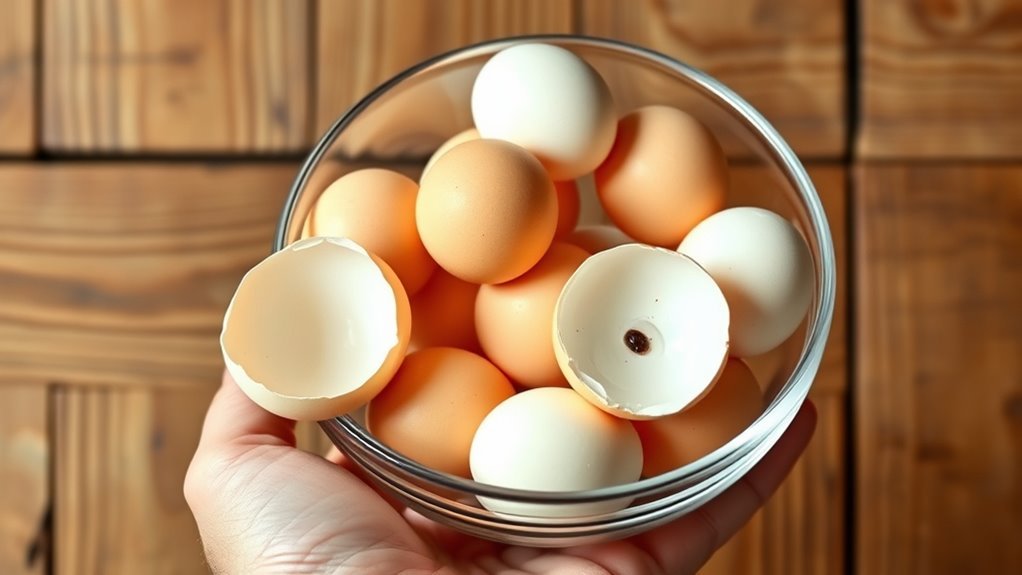
Although fertilized and unfertilized eggs look the same when freshly laid, you can identify fertilized eggs by looking for a small white “bullseye” or germinal disc on the yolk after cracking them open.
When you look at the yolk, this white dot or small white spot signals a fertilized egg. Before incubation, this white spot is the main visible sign of fertilization.
Candling eggs after about seven days can reveal more detailed signs of fertilization like veins or dark spots, but that’s not always practical before storage.
To check an egg’s freshness and fertilization status, crack it open carefully and spot the white bullseye on the yolk. This simple step helps you recognize fertilized eggs before storing or cooking them.
How to Store and Cook Fertilized Eggs Safely

When you collect fertilized eggs, you should refrigerate them immediately at 40°F (4°C) to stop any embryo development and keep them fresh. Proper storage prevents incubation and slows spoilage, reducing the risk of bacteria growth.
Refrigerate fertilized eggs immediately at 40°F (4°C) to halt embryo growth and maintain freshness.
Avoid storing cracked or dirty fertilized eggs, as these are more prone to contamination. For safety, use eggs within 3-4 days of laying.
When cooking fertilized eggs, make sure both the yolk and white are firm by reaching an internal temperature of at least 160°F (71°C). This proper cooking temperature kills harmful bacteria, keeping you safe.
Also, be sure to remove broody hens promptly to prevent unwanted incubation. By following these refrigeration and cooking guidelines, you can maintain freshness and safety, so you can enjoy fertilized eggs without worry.
Frequently Asked Questions
Are You Supposed to Eat Fertilized Chicken Eggs?
Yes, you can eat fertilized chicken eggs safely. Just make sure they’re fresh, properly refrigerated, and show no signs of embryo development. They taste the same and have the same nutrition as regular eggs, so enjoy!
Can I Eat Eggs if I Have Coronary Artery Disease?
You can eat eggs if you have coronary artery disease, but you should limit your intake. Stick to one egg a day, choose egg whites, and talk to your doctor for personalized advice to keep cholesterol in check.
Are Eggland’s Best Eggs Fertilized?
No, Eggland’s Best eggs aren’t fertilized because their hens usually aren’t exposed to roosters. You can trust these eggs are safe, inspected carefully, and comparable to typical store-bought eggs in nutrition and quality.
How Do Farmers Know if a Chicken Egg Is Fertilized?
You don’t have to read between the lines—farmers crack the egg open to look for a white bullseye or germinal disc on the yolk. Candling reveals veins or embryos, confirming fertilization before incubation starts.
Conclusion
Eating fertilized chicken eggs safely is like steering a gentle stream—you just need the right steps to keep everything flowing smoothly. First, identify fertilized eggs before storing them to avoid surprises. Then, store them properly in the fridge and cook them thoroughly to kill any harmful bacteria.
By following these simple tips, you’ll enjoy your eggs worry-free. Cooking fertilized chicken eggs well ensures they’re safe and tasty, turning a potential risk into a healthy, delicious experience every time. So, whether you’re cracking open a fresh batch or trying something new, these easy steps help you savor fertilized chicken eggs safely and confidently.