

5 Key Qualifications to Be an Egg Donor
To be an egg donor, you need to be a healthy woman aged 20 to 30 with a regular menstrual cycle and no history of genetic disorders. These key qualifications help ensure the best outcomes for both the donor and recipient.
You’ll go through thorough medical and genetic screenings, which include blood tests and hormone assessments. This helps confirm that you’re physically ready for the donation process.
There’s also a psychological evaluation to make sure you’re emotionally prepared for what’s involved.
Plus, legal criteria require donors to be between 21 and 35 years old and able to give informed consent.
The donation itself involves hormone treatments followed by a minor medical procedure to retrieve the eggs.
It’s important to fully understand the entire process and what’s expected before deciding to become an egg donor.
Key Takeaways
- Women aged 20 to 30 with a healthy reproductive system and regular menstrual cycles are eligible.
- A BMI of 30 or less, with no smoking or drug use, is required for donor health.
- Candidates must have no family history of genetic disorders and pass genetic screening tests.
- Psychological evaluation and counseling are necessary to assess emotional readiness and motivation.
- Legal eligibility requires informed consent, confidentiality agreements, and compliance with ethical standards.
Who Can Become an Egg Donor?

Although requirements vary by program, you can typically become an egg donor if you’re a woman aged 20 to 30 with a healthy reproductive system and regular menstrual cycles. This age range guarantees ideal egg quality and fertility.
Women aged 20 to 30 with healthy reproductive systems and regular cycles are ideal egg donors.
To meet donor eligibility, you should have no family history of genetic disorders and maintain good genetic health. Your BMI should be 30 or less, reflecting a healthy lifestyle that avoids smoking and drug use.
Programs may prefer women who have previously given birth or donated eggs, but prior experience isn’t always required. Additionally, you must live within a specific geographic area, usually within 90 minutes of certain fertility clinics, to participate.
Meeting these criteria helps guarantee you’re a suitable candidate for egg donation. So, if you fit the bill, you might be a great match!
Medical and Genetic Screening for Egg Donors
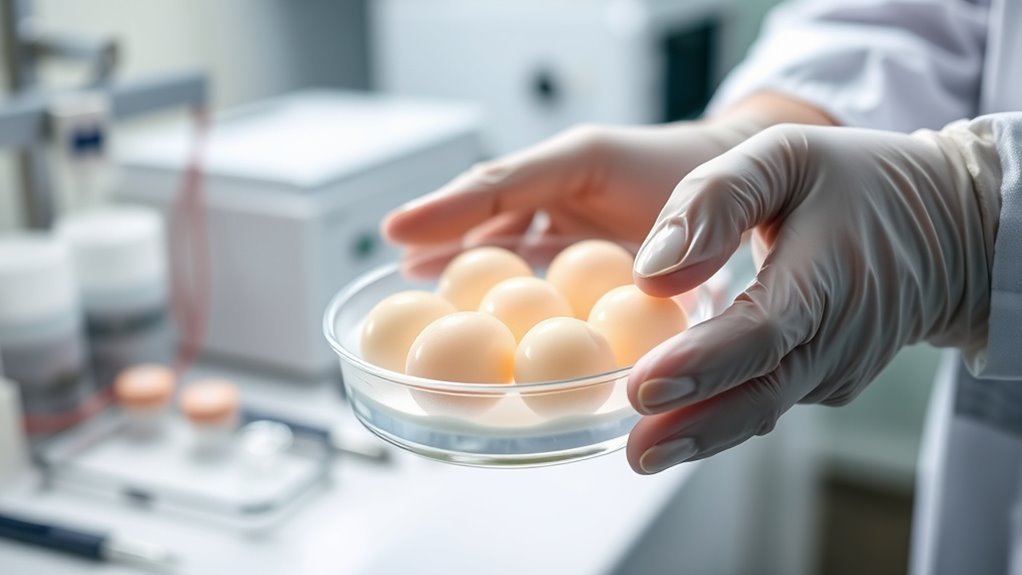
Because your health and the well-being of future children are top priorities, egg donation involves thorough medical and genetic screening. Medical screening includes blood tests for infectious diseases like HIV, hepatitis B and C, syphilis, and HTLV-1.
You’ll also undergo physical exams and hormone level assessments to evaluate your reproductive health and ovarian reserve. These steps help make sure everything is in good shape for donation.
Genetic testing is essential to identify inherited disorders such as Huntington’s disease, Tay Sachs, sickle cell anemia, and hemophilia. Providing a detailed family medical history helps assess potential genetic risks.
Screening protocols combine these tests and evaluations to guarantee your safety and that of future offspring. This extensive process helps clinics select donors with the healthiest profiles, safeguarding the entire egg donation journey from start to finish.
Psychological Screening for Egg Donors

While medical and genetic screenings focus on your physical health, psychological screening guarantees you’re emotionally prepared for egg donation. This process involves meeting with a mental health professional who conducts a psychological evaluation to assess your emotional readiness and mental health.
You’ll complete psychological assessments or questionnaires to examine your motivations and identify any emotional risks. Counseling plays a key role, helping you explore feelings about the genetic link to future children and address concerns.
The evaluation assures you can handle emotional stress during and after donation. Additionally, support services, including independent counseling, are recommended to provide ongoing emotional assistance throughout your donation journey.
Psychological screening safeguards your well-being, making certain you’re mentally and emotionally equipped for every step of the process. It’s all about making sure you feel ready and supported along the way.
Legal Eligibility and Ethical Considerations
Meeting legal eligibility requirements and guiding you through ethical considerations are essential steps in your egg donation journey. You need to be between 21 and 35 years old to meet legal eligibility. Plus, you’ll provide informed consent, fully understanding what it all means.
Ethical screening will look at your family medical history and assess your mental health. This helps guarantee safety and makes sure everything aligns with ethical guidelines.
Keep in mind some key legal considerations like maintaining confidentiality through strict agreements. Also, it’s important to understand the ownership rights of your donated eggs.
You’ll want to be aware of legal restrictions on known donations too. And, of course, you’ll need to comply with ethical guidelines from reproductive medicine organizations.
Egg Donation Process and Follow-Up
As you prepare to donate eggs, you’ll undergo ovarian stimulation through hormone injections. These are closely monitored with ultrasounds and blood tests to track how your body responds.
The egg donation process involves multiple medical visits. During these appointments, you’ll receive hormone treatments, medical assessments, and psychological evaluations.
Egg retrieval is a minor surgical procedure performed by fertility specialists. After the eggs are collected, they are fertilized, and the resulting embryos undergo transfer to the recipient.
Post-procedure care and follow-up are important to ensure your health and recovery. Your medical team will monitor you closely during this time.
| Step | Description |
|---|---|
| Ovarian Stimulation | Hormone injections with regular monitoring |
| Medical Visits | Physical and psychological assessments |
| Egg Retrieval | Minor surgery to collect eggs |
| Embryo Transfer | Fertilized eggs transferred to recipient |
| Follow-Up | Monitoring and post-procedure care |
Frequently Asked Questions
What Disqualifies You for Egg Donation?
You’re disqualified if you’ve used drugs recently, had unsterile tattoos or piercings, engaged in prostitution, have genetic disorders in your family, recent STIs, hormonal birth control disrupting cycles, or multiple recent sexual partners.
How Much Money Do Egg Donors Get Paid?
You can expect to earn between $6,500 and $15,000 per donation cycle, with first-timers usually getting around $7,000. Think of it as a paycheck for your time, effort, and health commitment.
Will My Baby Have My DNA if I Use a Donor Egg?
If you use a donor egg, your baby won’t have your DNA because the genetic material comes entirely from the egg donor. Your DNA only contributes if you provide the sperm for fertilization.
Is It Hard to Be Accepted as an Egg Donor?
Yes, it can be hard to be accepted as an egg donor since only about 10% of applicants qualify. You’ll need to meet strict health and age criteria, pass tests, and undergo thorough evaluations to get approved.
Conclusion
So, you want to be an egg donor? Just breeze through medical tests, pretend you’re emotionally invincible, and sign a mountain of legal papers—no big deal, right?
If you can juggle all that while staying ethical and sane, congratulations! You’re basically a superhero in the world of reproduction.
Remember, it’s not just about being fertile, it’s about being fabulous, fearless, and ready to help someone build their family—no cape required. Being an egg donor means more than just biology; it’s about compassion, strength, and commitment.
So, if you’re ready to take on the challenge, embrace the process and make a difference, you’re on your way to becoming a truly amazing egg donor. It’s a journey filled with care, courage, and the power to change lives.