10 Facts About How Many Eggs Ducks Do Lay Per Year
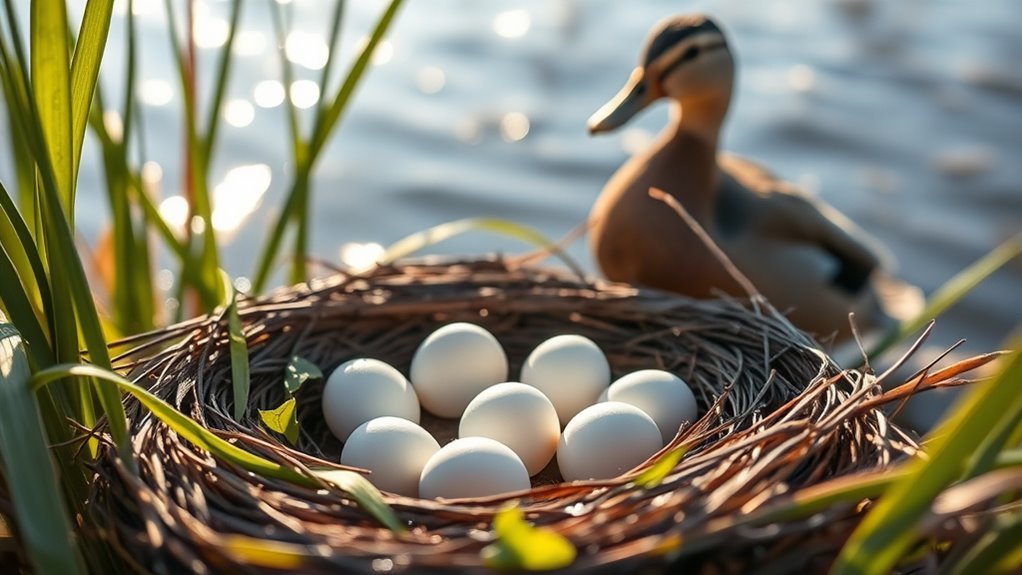
You can expect your ducks to lay between 250 and 350 eggs a year, depending on their breed, age, and health. Most ducks start laying eggs at around 5 to 7 months old. Usually, they lay one egg a day in the morning.
Egg production tends to peak during the first couple of years and then slows down as they get older. Factors like daylight, nutrition, and stress can also affect how many eggs your ducks lay.
If you want to boost egg quality or learn more about the differences between breeds, there’s a lot more to explore. Understanding these details can help you get the most out of your ducks’ laying potential.
Key Takeaways
- Most ducks lay between 250 and 350 eggs annually, with peak production during the first 1-2 years.
- Khaki Campbell ducks average about 325 eggs per year, while Welsh Harlequin and Indian Runner lay around 300.
- Egg production usually begins at 5-7 months old and often decreases after the first two years.
- Seasonal changes and daylight length significantly influence egg laying, with reduced laying in fall and winter.
- Proper nutrition, lighting, and stress-free environments are essential to maintain consistent, high egg production.
How Many Eggs Does a Duck Lay Per Year?
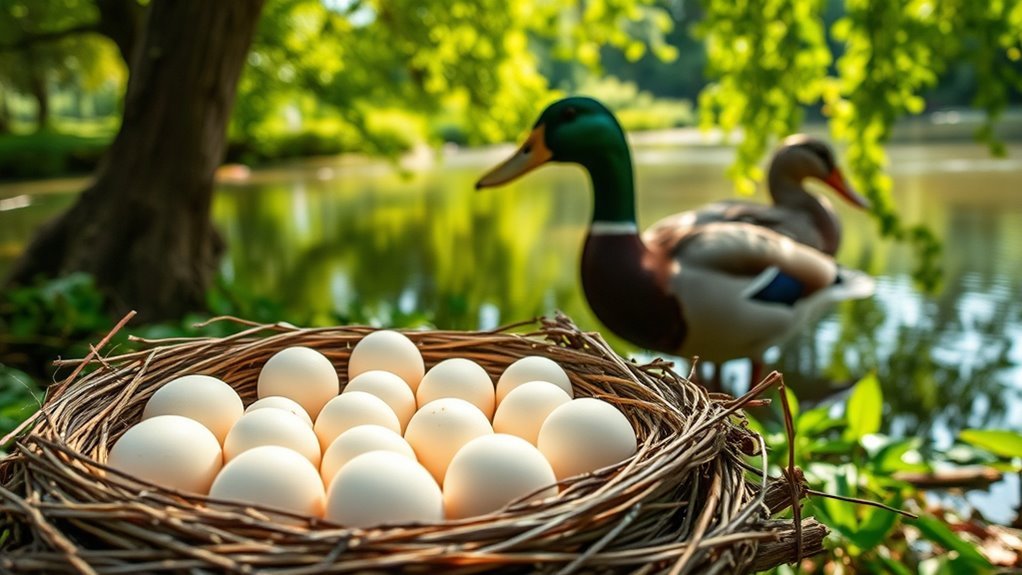
While the number of eggs a duck lays each year depends largely on its breed, you can expect most ducks to produce between 250 and 350 eggs annually.
Egg production varies by breed, with most ducks laying between 250 and 350 eggs yearly.
When it comes to duck eggs, breeds like Khaki Campbell, Welsh Harlequin, and Indian Runner stand out for their impressive egg production.
Khaki Campbells can lay about 325 eggs per year under ideal conditions, while the other two breeds typically produce around 300 eggs annually.
Keep in mind, egg production can decline with age or seasonal changes, especially in ducks not bred for year-round laying.
To maximize the number of duck eggs, you’ll want to provide proper care, nutrition, and a comfortable environment. These factors play an essential role in how many eggs your ducks will lay each year.
Best Duck Breeds for High Egg Production
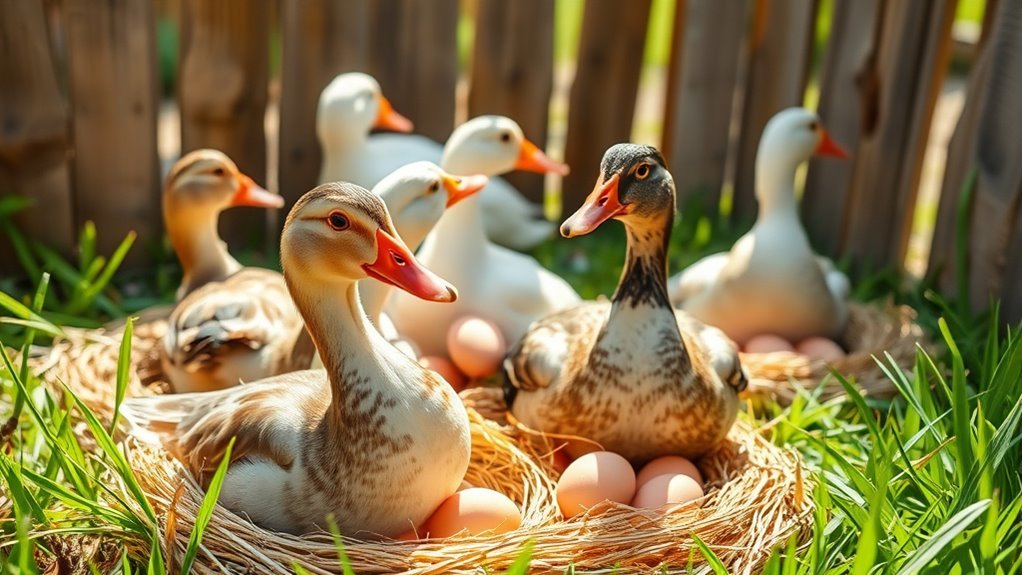
If you want a steady supply of duck eggs, choosing the right breed makes all the difference. Among the best duck breeds for laying eggs, the Khaki Campbell stands out, producing around 325 eggs annually.
Welsh Harlequins and Indian Runner ducks both offer about 300 eggs per year. The Indian Runner is especially known for its large white eggs and easy management.
Magpie ducks also provide a reliable supply, laying between 250 to 300 eggs starting at 25-30 weeks old. While the Abacot Ranger lays fewer eggs, about 200 annually, its hardy and peaceful nature appeals to many.
How Age and Health Affect Your Duck’s Egg Laying
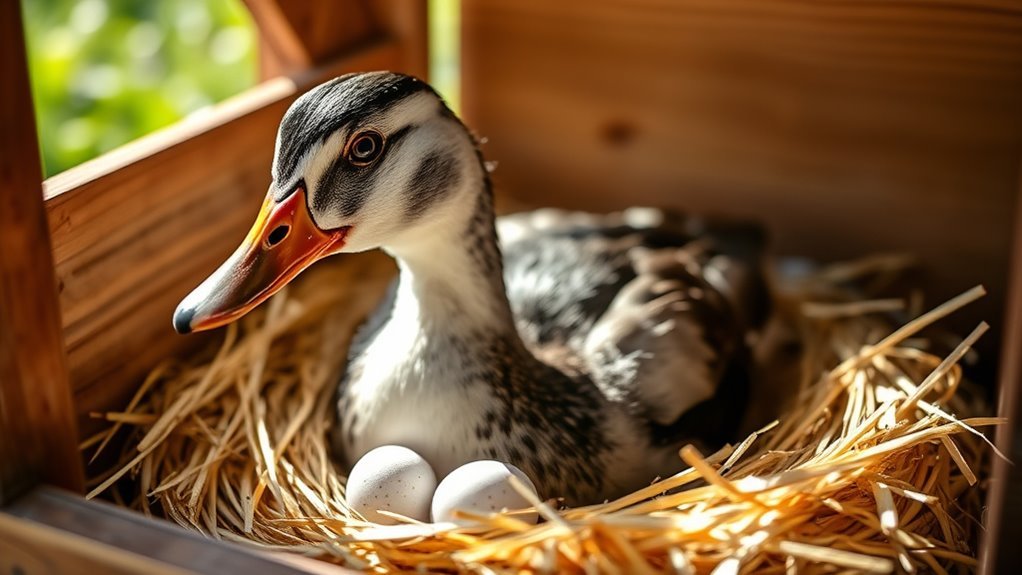
Because a duck’s age and health directly influence its egg production, understanding these factors helps you manage your flock more effectively. Ducks generally start laying between 5 to 7 months old, hitting peak production during their first 1-2 years.
Egg laying usually remains strong for about three years but declines noticeably as age advances, especially after the peak period. Some strains can lay efficiently up to five years, but that’s less common.
Health plays a vital role too—illness, stress, or poor nutrition can reduce or pause egg laying regardless of a duck’s age. To keep your ducks laying well, focus on maintaining their health through a balanced diet and minimizing stress.
Monitoring both age and health guarantees you get the best egg yield over time. So, keep an eye on these factors to make sure your flock stays productive!
What Time of Day Do Ducks Usually Lay Eggs?
Although egg-laying patterns can vary slightly, ducks usually lay their eggs early in the morning, often around dawn. You’ll notice that most ducks lay their eggs within a few hours after sunrise, sticking to a consistent morning routine.
Ducks typically lay their eggs early in the morning, often within hours after sunrise.
This timing helps guarantee they lay one egg per day before they start foraging. If you keep ducks, understanding this pattern can help you collect eggs efficiently and monitor their health and laying habits.
While the exact hour can shift a bit, morning remains the prime time for laying across many breeds. Knowing when ducks lay eggs per year gives you insight into their natural cycles.
This makes it easier to manage their care and optimize their environment for steady egg production.
How Weather and Daylight Affect Duck Egg Laying
When daylight hours stretch longer in spring and summer, ducks lay more eggs, responding naturally to the increased light. You’ll notice hens typically lay best when they get 14 to 16 hours of daylight, mirroring natural seasonal changes.
However, as daylight shortens in fall and winter, egg production often drops or stops unless you provide supplemental lighting. Weather also plays a role; cold temperatures and heavy rain can reduce laying because ducks conserve energy to stay warm and healthy.
To keep egg production steady year-round, you can guarantee ducks get consistent exposure to natural or artificial light regardless of weather conditions. By managing daylight and accounting for weather, you help maintain regular egg laying through changing seasons.
How Often Do Ducks Lay Eggs? Understanding Laying Patterns
You’ll notice ducks usually lay one egg a day, mostly in the early morning. Their laying slows down during seasonal changes and when they become broody, taking breaks between clutches.
Understanding these patterns helps you predict how often eggs will be available throughout the year. So, keeping an eye on their behavior can give you a good idea of when to expect fresh eggs.
Daily Laying Frequency
If you watch closely, you’ll notice ducks typically lay one egg each day, mostly in the early morning. This daily laying frequency helps you understand their consistent egg production.
Here’s what you can expect about their daily eggs:
- Most ducks lay one egg per day during their active laying period.
- Some breeds lay in clutches, producing several eggs before pausing.
After a clutch, ducks may take a break up to two weeks before laying resumes. Ducks generally lay eggs for about three years, with some continuing up to five.
You might see a brief slowdown during their fall molt, but daily eggs quickly pick back up. So, don’t worry—it’s just a temporary pause.
Seasonal Laying Variations
Although ducks tend to lay one egg per day, their egg production changes with the seasons. You’ll notice that seasonal laying plays a big role in how often ducks lay eggs throughout the year.
Most ducks lay eggs in clutches, then take breaks that can last up to two weeks before starting again. During the fall molt, egg production often slows or pauses entirely, as ducks focus on growing new feathers.
Environmental factors like daylight hours and breed also influence laying patterns, so some ducks may lay more consistently than others. Understanding these seasonal laying variations helps you predict when your ducks will be most productive and manage their care accordingly to support healthy, regular egg production.
Broodiness Impact on Laying
Seasonal changes affect how often ducks lay eggs, but broodiness plays an equally important role in their laying patterns. When ducks get broody, they focus on incubating eggs rather than laying new ones, which can pause egg production for weeks.
Understanding how broodiness impacts laying patterns helps you predict when your ducks will lay consistently or take breaks.
Here’s what you should know about broody behavior and laying patterns:
- Most breeds lay eggs daily during the laying season.
- Ducks lay clutches—several eggs in a row—before stopping.
- Broody ducks stop laying to incubate eggs.
After a clutch, ducks often pause laying for up to two weeks. Breeds with strong broody instincts may halt laying entirely during nesting.
Recognizing broody phases helps you manage expectations for egg output.
What Size Are Duck Eggs Compared to Chicken Eggs?
When you compare duck eggs to chicken eggs, you’ll notice that duck eggs generally weigh about 2.6 ounces (75 grams), making them roughly one and a half times larger. Depending on the duck breed, these eggs can range from the size of small chicken eggs to twice the size of large chicken eggs.
Larger duck breeds tend to lay bigger eggs, sometimes reaching up to 100 grams, while smaller breeds produce slightly smaller ones. Overall, duck eggs are significantly larger and heavier than most chicken eggs, which is something you’ll quickly observe if you handle both.
This size difference makes duck eggs stand out, especially if you’re used to the standard weight and size of chicken eggs in your kitchen. It’s pretty easy to tell them apart once you get a feel for it!
Why Duck Eggs Taste Richer & How Their Yolks Differ
You’ll notice duck eggs taste richer because their yolks are larger and packed with more fats and nutrients. This gives them a creamier texture and a stronger flavor compared to chicken eggs.
It’s pretty interesting once you understand these differences. That’s why duck eggs are so prized in cooking and baking.
Yolks’ Richness Explained
Because duck eggs have larger yolks that make up about 56% of the edible portion, they taste richer and creamier than chicken eggs. You’ll notice their yolks carry more fat and nutrients, which enhances their richness and makes them stand out.
Here’s what you should know about duck egg yolks:
- Larger size means a higher fat content
- Richer texture that’s perfect for baking
- More vitamins and minerals than chicken egg yolks
They have a creamier mouthfeel that adds depth to dishes. Plus, there’s a natural decadence that elevates recipes.
This richness is why chefs and bakers often prefer duck eggs. When you use them, you get a yolk that’s not just bigger but packed with flavor and nutritional value.
It creates a unique richness you won’t find in regular eggs.
Flavor And Texture Differences
The richness of duck egg yolks directly influences their flavor and texture, setting them apart from chicken eggs. You’ll notice duck eggs have a more pronounced, savory flavor because their yolks are larger and contain more fat.
In fact, the yolk makes up about 56% of the edible portion, giving duck eggs a creamier, denser texture. This higher yolk-to-white ratio means duck eggs taste richer and more intense, which is why chefs often prefer them for baking and gourmet recipes.
When you cook with duck eggs, you’ll appreciate how their unique flavor enhances dishes. They add depth and a luscious mouthfeel that chicken eggs just can’t match.
What Ducks Need to Keep Laying Eggs: Nutrition Essentials
Although egg production depends on various factors, providing ducks with a balanced diet rich in energy, protein, calcium, and phosphorus plays a crucial role in keeping them laying consistently. Proper nutrition directly impacts the quality and quantity of eggs you can expect from your ducks.
To support your ducks’ nutrition needs, focus on feeding nutrient-rich layer-specific feed during the laying period. Make sure they get enough calcium to build strong eggshells.
Also, adjust feed types according to their life stages—starter, grower, and layer. Don’t forget to offer clean, fresh water at all times since it helps with digestion and egg formation.
Balancing protein and energy is key to keeping your ducks healthy and productive. When you get this right, your ducks will keep laying eggs happily!
Best Practices to Maximize Duck Egg Production
To maximize your ducks’ egg production, start by choosing high-yield breeds like Khaki Campbell or Welsh Harlequin. These breeds are known for laying consistently well.
Focus on providing balanced nutrition and consistent feeding schedules to keep them healthy and laying. Ducks really respond well when their diet is steady and nutritious.
Also, manage their environment carefully by maintaining clean, stress-free conditions with proper lighting and fresh water. When ducks feel comfortable, they’re more likely to produce eggs regularly.
Optimal Breeds Selection
When you choose high-yield breeds like Khaki Campbell, Welsh Harlequin, or Indian Runner, you can expect ducks to lay between 250 and over 300 eggs annually under ideal conditions. Selecting these best breeds is your first step toward maximizing egg production.
To get the best results, keep ducks in their prime reproductive age, which is around 3 to 5 years. Also, try to minimize stress and prevent broody behavior as much as possible.
Avoid disruptions during molting periods, since that can really affect egg laying. It’s also important to maintain a clean and stable environment for your ducks.
Last but not least, provide consistent water and nutrition—more on that in the next subtopic.
Nutrition and Feeding
Since nutrition plays a crucial role in egg production, you need to provide ducks with a balanced diet that includes adequate energy, protein, calcium, and phosphorus. Feeding ducks a high-quality layer feed with about 3% calcium ensures strong eggshells and consistent laying.
Always offer clean, fresh water to support digestion and shell formation. While letting ducks forage and giving supplemental grains can boost nutrition, don’t rely solely on these; a formulated diet meets their specific needs better.
Avoid feeding medicated chicken feed unless a vet approves it because some medications can harm waterfowl. By managing feeding carefully, you’ll help your ducks produce healthier, more frequent eggs, maximizing your flock’s productivity efficiently.
Environmental Management
Proper nutrition lays the foundation for strong egg production, but managing the environment plays a big role in keeping your ducks laying consistently. You need to create an ideal environment that supports their natural rhythms and health.
Focus on maintaining proper lighting—about 14-16 hours of daylight—to stimulate regular laying. Also, keep their nesting area clean, dry, and secure from predators to reduce stress.
Managing environmental factors like temperature and sanitation prevents disruptions in laying cycles. Finally, regular health checks and disease prevention keep your flock productive and healthy.
Here’s how to maximize egg production through environmental management:
- Provide consistent 14-16 hours of lighting daily
- Maintain a clean, dry, and predator-proof nesting environment
- Control temperature and minimize environmental stressors
- Conduct routine health checks and vaccinations
- Practice strict hygiene and sanitation protocols
Frequently Asked Questions
What Ducks Lay 300 Eggs a Year?
You’ll find Khaki Campbell, Welsh Harlequin, and Indian Runner ducks lay around 300 eggs a year. If you keep them healthy and well-fed, they’ll produce eggs nearly every day for impressive annual yields.
How Many Duck Eggs per Day?
You can expect a duck to lay about one egg per day under ideal conditions. Sometimes they pause during molting or nesting, but generally, they keep up this pace, giving you nearly daily eggs most weeks.
How Long Is a Female Duck Pregnant?
You might wonder how long a female duck stays pregnant, but she isn’t pregnant at all. Ducks lay eggs that get fertilized externally, so there’s no pregnancy period to track or wait for.
What Month Do Ducks Stop Laying Eggs?
Ducks usually stop laying eggs around September to November during their fall molt. You might see some continue into early winter if conditions are mild or they get extra light, but most pause by late fall.
Conclusion
Think of your duck as a garden—each egg is a blossoming flower that needs the right soil, sunlight, and care. By choosing the best breeds, nurturing their health, and understanding their rhythms, you’ll harvest a bountiful crop of eggs year-round.
Remember, just like tending a garden, patience and attention to detail will help your ducks lay their richest, most vibrant eggs. Keep nurturing, and your egg-laying garden will flourish beautifully.
Focusing on how many eggs ducks lay per year means paying close attention to their environment and well-being. Healthy ducks, good nutrition, and the right breed choices are key to maximizing egg production. So, stay consistent and enjoy the rewarding process of raising ducks that lay plenty of eggs all year long!